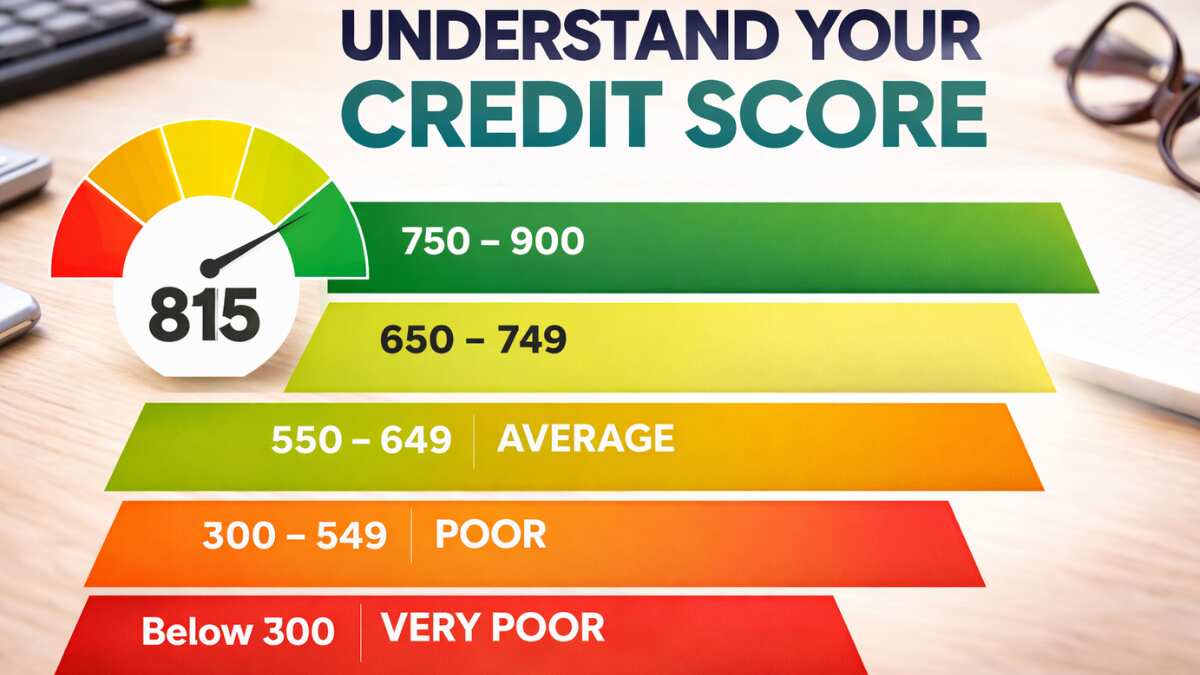
A credit score is a number that shows how well you manage your money and repay your debts. The Credit Information Bureau (India) Limited (CIBIL) is the main scoring system in India, which evaluates borrowers from 300 to 900.
The lender considers you responsible when you have a higher credit score, while a lower credit score may not be helpful for loans.
A CIBIL Report provides a complete account of your credit activity, including details about your loans, credit cards, payment records, credit limits and inquiries. The report and score help the lender decide whether a person is eligible for loans or credit cards, and at what interest rate.
New borrowers, also known as new-to-credit (NTC) consumers, are those with no prior credit history and start from scratch with their first loan, credit card or other credit products.
How to know whether you are creditworthy or not?
You can know your creditworthiness by looking at your CIBIL Score and Report:
- CIBIL Score: A score above 750-900 indicates excellent creditworthiness, 650-750 is good, 550-650 is average, 300-550 is poor, and below 300 is very poor.
- Credit history: Lenders can determine how responsible one is with their credit handling through timely payments, low credit usage and a limited number of credit inquiries.
- Lender perspective: Lenders approve applications only if you are a creditworthy borrower with a better interest rate.
- Monitoring reports: You can identify creditworthy issues through regular CIBIL Report reviews, which enable you to find issues.
The following ten basic tips will help you boost your credit score and maintain good credit health.
- Use Credit Responsibly – Only take loans or credit if necessary and not because you can.
- Repay on Time – The due date requires you to make all EMI payments and credit card payments. The score decreases if payment is due, so better repay on time.
- Start Small – The new borrower should begin credit building through a small consumer durable loan or secured credit card, or a Buy Now Pay Later option.
- Keep Credit Utilisation Low – Your total credit limit should not exceed 30 per cent usage. Your score decreases when you have high credit usage.
- Avoid Being a Guarantor – Your credit score will suffer when you guarantee another person’s loan and that person fails to repay. Be careful.
- Don’t Apply for Multiple Credits at Once – Lenders see multiple credit card and loan applications within a brief period as an indication of financial instability.
- Monitor Your Credit Report – You should review your CIBIL Report frequently to find any mistakes or signs of identity theft. You can get a free report annually from TransUnion CIBIL.
- Avoid Maxing Out Cards – Your credit score decreases when you reach your maximum credit card limit. Your credit score improves when you keep some credit available.
- Choose Longer Tenures if Needed – Longer loan repayment periods decrease monthly payment amounts, which enables you to make timely payments that enhance your repayment record.
- Build Positive Habits – You should always make your payments on time while keeping your credit usage low and using debt responsibly. The consistent practice will result in improved score outcomes.
Credit Score Table
| 750 – 900 (Excellent) | Easy approval for loans and credit cards |
| 650-750 (Good) | Likely approval with favourable terms |
| 550-650 (Average) | May face some difficulties and higher interest rates |
| 300-550 (Poor) | Approval harder, interest rates high |
| 300 and below (Very Poor) | Difficult to get loans or credit cards |
A credit score demonstrates your capacity to handle financial obligations. The keys to building and maintaining a strong credit score begin with small credit usage, require timely payments, low utilization and report monitoring and disciplined behaviour. The program enables customers to obtain loans with better interest rates and increased credit limits, and benefits from financial development over an extended period.