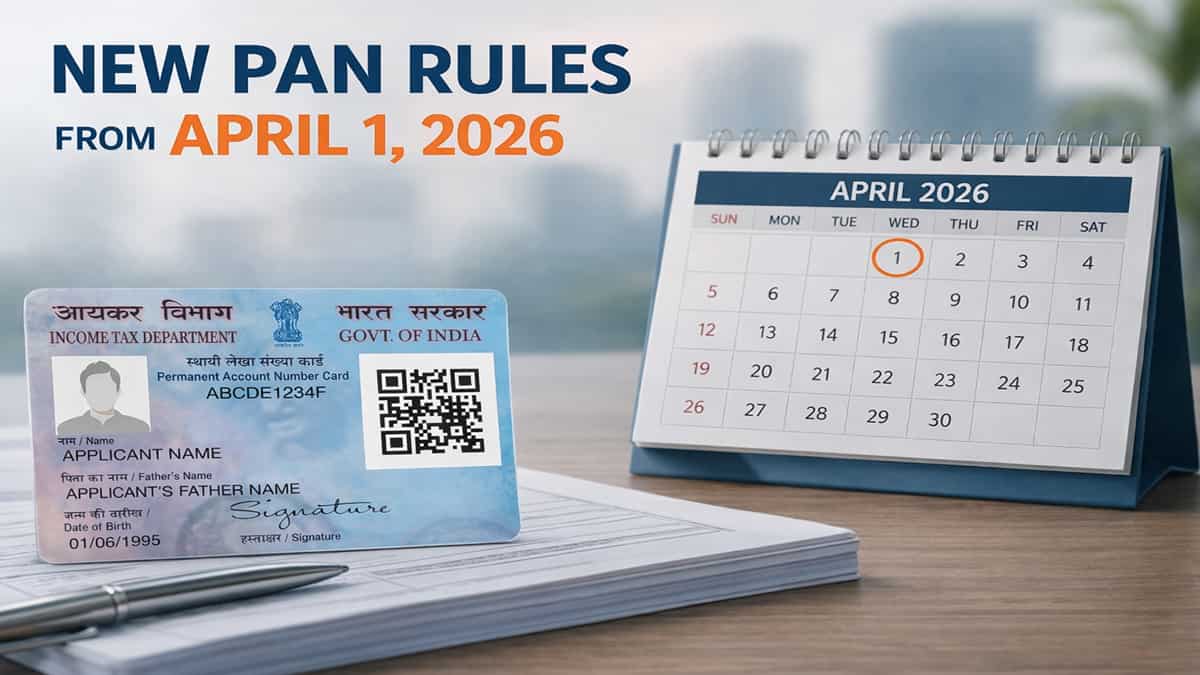
New PAN rules from April 1: From April 1, 2026, a new set of PAN rules will quietly change how many of your everyday financial activities work from applying for a PAN card to making big purchases or handling cash. These updates, part of the Income Tax Rules 2026, are not just about paperwork. They will affect how you spend, invest and even plan your finances.
At the heart of these changes is a simple shift: small transactions become easier, but bigger ones will be tracked more closely. Whether it’s buying property, paying a hotel bill or dealing in cash, the rules are being reset to bring more transparency into the system.
Why the government is changing PAN rules now?
The idea behind these updates is fairly straightforward – make the tax system smarter without making life harder for ordinary people. The focus is on three things:
- Keeping a closer watch on high-value transactions
- Reducing unnecessary compliance for small spends
- Bringing more transparency to sectors like real estate and cash usage
In simple terms, the system is moving towards less hassle for everyday spending and tighter checks where large sums are involved.
Aadhaar-only PAN application ends – what you need now?
One of the biggest changes is in the PAN application process. From April 1, 2026:
- Aadhaar alone will no longer be enough
- You will need additional proof of date of birth
Documents that can be used include:
- Birth certificate
- Voter ID
- Class 10 certificate
- Passport or driving licence
If you are planning to apply, there’s still time – Aadhaar-only applications remain valid till March 31, 2026. After that, the process becomes stricter.
PAN must match Aadhaar – no more name differences
Another important update is about your identity details. From April 1:
- Your PAN name will be exactly as per Aadhaar
- You won’t be able to enter a different name
So if there’s any mismatch in your Aadhaar details, it’s best to fix it now. Otherwise, you could face delays or issues later.
New PAN forms coming – old ones won’t work
The application system itself is also being updated.
- New PAN forms will be introduced
- Old forms will not be accepted after April 1
So whether you are applying fresh or updating details, make sure you use the new format.
Cash transactions: yearly tracking replaces daily limit
This is one of the biggest practical changes.
- PAN required if your total cash deposits or withdrawals cross Rs 10 lakh in a financial year
- PAN was needed for transactions above Rs 50,000 per day
- No need to quote PAN for frequent small deposits
- But your total yearly cash activity will now be tracked
Buying a car or bike? New PAN limit explained
There’s some relief here, especially for smaller buyers.
- PAN required only if the vehicle costs more than Rs 5 lakh
- PAN was required for every vehicle purchase
This means fewer formalities for budget purchases, while premium buys remain under watch.
Hotel bills, events: higher limit gives some relief
Spending on hotels, weddings and events also gets a breather.
- PAN required only if payment exceeds Rs 1 lakh
So smaller bookings and expenses become easier, but large bills will still need reporting.
Property deals: PAN threshold doubled to Rs 20 lakh
Real estate transactions are seeing a major shift.
- PAN needed only if property value exceeds Rs 20 lakh
This reduces paperwork for smaller deals but ensures bigger transactions are properly tracked.
Insurance rules tighten – PAN needed from the start
Insurance policies will now be linked more closely with PAN.
- PAN required right at the start of your relationship with the insurer
- Needed only if premium crossed Rs 50,000
This means every policy will now be tracked from day one.
Who gains and who faces stricter checks?
- Salaried individuals with routine spending
- Middle-class buyers
- People using digital payments
Will face tighter scrutiny:
- Heavy cash users
- Real estate investors
- High-value spenders
These changes make one thing clear – PAN is becoming central to your financial identity. In practical terms:
- Small transactions will feel smoother
- Big transactions will be easier to track
- Cash usage may need to be more controlled
- Your documents must be accurate and updated
What you should do before April 1?
To avoid last-minute issues, it’s worth taking a few simple steps:
- Check if your PAN is linked with Aadhaar
- Update any errors in Aadhaar details
- Apply for PAN before March 31 if possible
- Understand new limits before making big purchases
- Prefer digital payments over cash