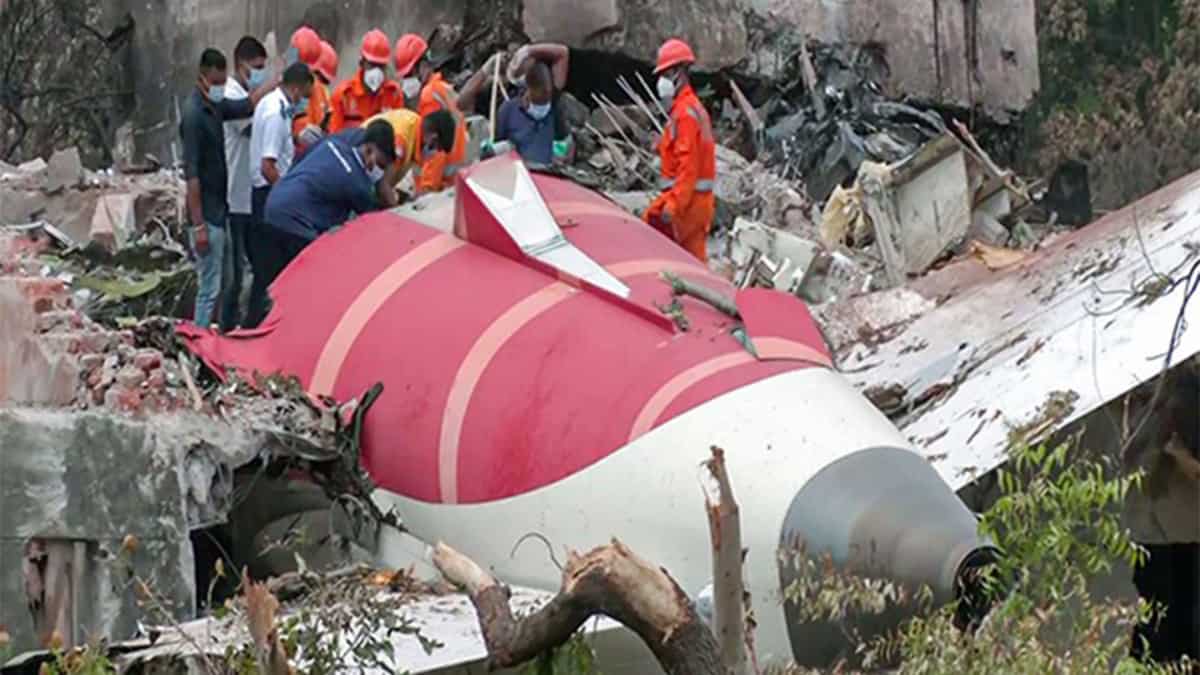
The Air India flight AI-171 accident, one of the deadliest aviation disasters of recent times, took place in Ahmedabad on June 12, 2025.
This incident came in notice when the Federation of Indian Pilots (FIP) issued a legal notice to the Aircraft Accident Investigation Bureau (AAIB) and raised objections of the summoning of Captain Varun Anand, the pilot of Air India.
The Dreamliner Boeing 787-8 met disaster just a few minutes after it had taken off from Ahmedabad. This event led to the loss of 260 lives including 229 passengers, 12 crew members, and 19 people on the ground.
Legal notice by Pilots Federation
The pilots union in its legal notice questioned the legal purpose of the summoning of Captain Anand, related to the deceased pilot Captain Sumit Sabharwal. The FIP claimed that he had no professional, operational or technical connection with the unfortunate incident of flight and he should not be considered an investigative witness.
Captain Anand had no direct connection to crash
The FIP argued in favor of Captain Anand that he was not involved in the planning of the flight, had not been at the site during the accident.
Hence, he cannot be considered a witness of fact, technical or otherwise, in the investigation process.
Confusing summons raises concerns
“Captain Anand was informed by his employer that the AAIB wanted him to appear before the investigators. However, the message was not clear enough to know why he was being called for the questioning, or how his presence in the investigation was relevant,” claims the pilot federation.
International rules on aviation investigations
The FIP was very categorical in its objection, saying that the standards of international aviation investigations, especially ICAO’s Annex 13, are very clear on how to carry out investigations into aircraft accidents. One of the main points of the standards is that the investigation should help to find out what went wrong in terms of safety and prevent it from happening again, rather than seeking to blame someone or impose personal liability.
Is summoning family members justified?
The federation fought back saying that bringing family members of the killed pilots for questioning only because of their relationship is against these international rules both in spirit and letter.
It cautioned such moves might create a bad example and hurt the trustworthiness of accident probing. The FIP stated that investigations are very much dependent on trust and voluntary cooperation from the aviation industry, and any action that is seen as intrusive or punitive could lead to less cooperation in the future.
The legal notice went on to say that calling Captain Anand, who has nothing to do with the aircraft, its operation, maintenance, or crew composition, was out of jurisdiction and tantamount to harassment, particularly in the wake of a personal tragedy.
The federation was also concerned that such measures might be a sign of an already decided plan to hold the deceased flight crew responsible instead of candidly looking into the technical or systemic issues.
Supreme Court case in progress
The FIP pointed out that the father of late Captain Sumeet Sabharwal and the federation have gone to the Supreme Court questioning the independence and fairness of the investigation being conducted by the AAIB. Those matters are presently under the court’s consideration.
Although the union showed disagreement to the matter, it nevertheless declared that the captain was still ready to coordinate with the officials investigating under the universal aviation safety considerations.
The federation mentioned his willingness to appear through video conferencing was pure intentionally but, won’t be seen as acceptance of the legality of the summons.
The AAIB is still looking into the circumstances surrounding the plunge of AI-171, which is still counted as one of the worst air disasters of late.