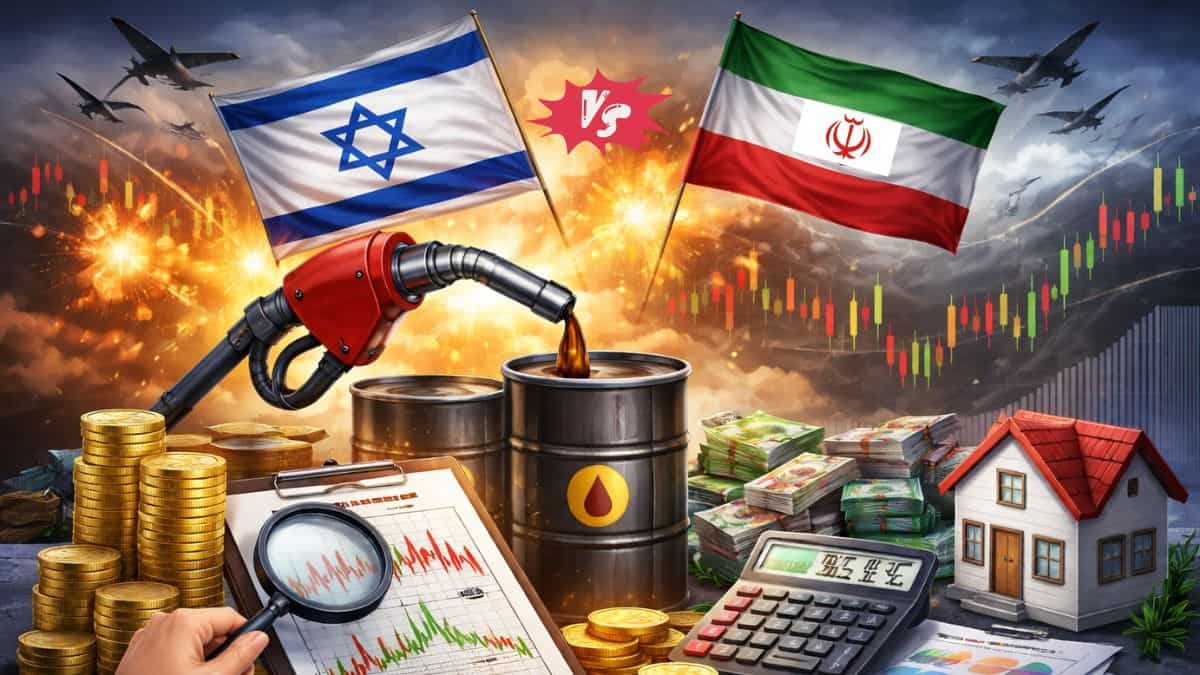
Escalating geopolitical tensions involving the United States, Israel and Iran have raised concerns about a possible impact on global crude oil supplies, inflation and financial markets.
Experts say prolonged conflict could push energy prices higher and create volatility in equity markets, but historical trends show that markets have often recovered after initial declines during geopolitical crises.
Strait of Hormuz Remains Key Global Oil Route
According to market experts, the key concern during any conflict in the Middle East is the impact on global oil supply, especially through the Strait of Hormuz, one of the world’s most critical oil transit routes.
Moneyfront CEO Mohit Gang said the strategic waterway plays a vital role in global energy transportation, and disruptions could have a wide-ranging economic impact.
“This is not a small or routine conflict. The Strait of Hormuz is one of the world’s largest oil transit channels, and nearly 40 per cent of global crude supply passes through it. If disruption continues for long, the global economy, including India, could face significant pressure,” Gang said.
India’s Heavy Dependence on Oil Imports
He noted that India imports nearly 80–85 per cent of its crude oil requirements, and a large portion of it comes from the Middle East. Any disruption in supply or a sharp rise in crude prices could therefore affect domestic inflation and economic growth.
“If crude oil prices remain elevated for several months, it could push up inflation, weaken the fiscal balance and also impact GDP growth. Energy costs are linked to almost every sector of the economy, from transportation to manufacturing,” he said.
Higher Oil Prices Could Raise Household Costs
Experts said crude oil prices influence a wide range of household expenses, including fuel, transportation and cooking gas. Higher energy costs can increase logistics and production expenses, eventually pushing up the prices of goods and services.
Mutual fund expert Vishwajit Parashar said the immediate impact of such conflicts is often visible in commodity markets and investor sentiment.
“India imports about 85 per cent of its crude oil. If oil prices rise sharply, it increases the cost of fuel, transport and other essential services. This may reduce household savings as expenses increase,” Parashar said.
Impact Depends on Duration of the Conflict
However, he added that the overall impact depends largely on how long the conflict lasts. “If the conflict is resolved quickly, the economic impact may remain limited. The current volatility is partly driven by sentiment as markets react to uncertainty in supply chains,” he said.
Oil Prices Can Influence Interest Rate Outlook
Experts said crude price spikes can also influence monetary policy. Higher oil prices generally push inflation higher, which may limit the ability of central banks to reduce interest rates.
Gang said a sustained rise in crude oil prices could affect multiple macroeconomic indicators.
“When oil prices rise by about 10 per cent, India’s inflation can increase by around 20 basis points, while economic growth may see a marginal impact. Fiscal balances and the current account deficit can also come under pressure,” he said.
He added that if crude remains elevated for a prolonged period, it could delay potential interest rate cuts or even lead to higher borrowing costs.
“If inflation rises due to higher energy prices, the central bank may find it difficult to reduce interest rates. In such a scenario, loan EMIs may remain high or even increase,” Gang said.
Geopolitical Crises Often Trigger Short-Term Market Corrections
Despite these risks, experts said market history suggests that geopolitical shocks often cause short-term corrections rather than long-term declines.
Parashar said investors often react sharply to news of wars or conflicts, leading to short-term volatility in equities.
“Many investors panic during such situations and exit markets. However, equity investments are meant for the long term. If investors remain disciplined and continue their investments, they usually benefit when markets recover,” he said.
Past Conflicts Show Markets Recover Over Time
According to him, historical trends show that market declines during geopolitical crises are often temporary. “In many past conflicts, markets have corrected by around 5 to 10 per cent initially. But once uncertainty reduces, markets have recovered and even delivered strong gains over the following months,” Parashar said.
Gang also cited historical examples where markets recovered after initial declines during major global events.
“During the Iraq war, markets fell about 6–7 per cent initially but later recovered and rose significantly in the following months. Similar patterns were seen after other global crises, including the pandemic period,” he said.
Staying Invested Is Key During Market Volatility
He noted that volatility is an inherent part of equity investing, and investors seeking higher long-term returns must be prepared to face such phases.
“If investors panic and exit during volatile phases, they often miss the strongest recovery days in the market. Long-term wealth creation requires patience and disciplined investing,” Gang said.
Experts said systematic investment plans (SIPs) in mutual funds can help investors navigate volatile markets more effectively.
Parashar said SIP investors may actually benefit during market corrections as they accumulate units at lower prices.
“When markets fall, investors get more units for the same investment amount. Over time, this helps improve the average purchase cost and can enhance long-term returns,” he said.
He advised investors to avoid making emotional decisions based on short-term geopolitical developments.
“Investors should continue their SIPs and maintain their long-term investment strategy. Temporary market declines should not lead to panic selling,” Parashar added.
Financial Preparedness and Diversification Remain Important
Experts also advised individuals to strengthen their financial preparedness during uncertain global conditions. Gang said maintaining an adequate emergency fund is an important step in financial planning.
“Households should maintain an emergency fund covering at least six months of expenses. This provides financial stability during uncertain periods and prevents the need to liquidate investments during market downturns,” he said.
He also suggested reviewing asset allocation and avoiding unnecessary financial commitments during uncertain times.
“Investors should review their portfolios to ensure proper diversification. It is also advisable to avoid large discretionary spending or new debt commitments if global uncertainty increases,” Gang said.
Experts said diversification across asset classes, including equity, fixed income and gold, can help reduce portfolio risks during volatile phases.
They added that while geopolitical tensions can create short-term uncertainty, markets have historically demonstrated resilience over the long term.
“Every major crisis in history has eventually been followed by recovery. Investors who stay invested and remain disciplined are usually the ones who benefit when markets stabilise,” Parashar said.
Experts said that while the current geopolitical tensions may create volatility in oil prices and financial markets, the long-term trajectory of economic growth and markets typically remains intact once uncertainties ease.