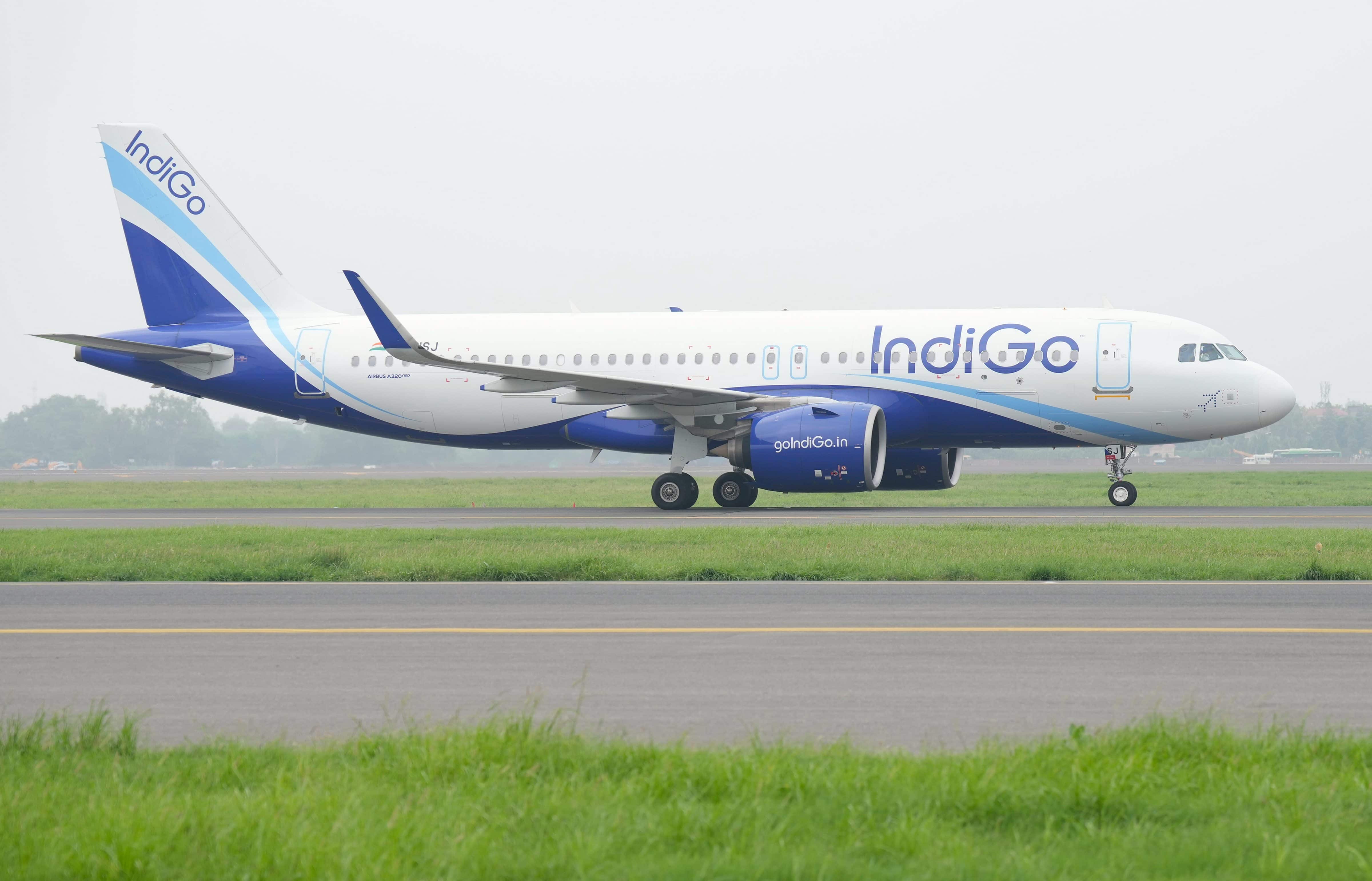
IndiGo Flight Crisis Explained: India’s aviation sector suffered an unprecedented setback in the first week of December 2025, as IndiGo, by far the country’s largest airline, began cancelling and delaying flights on a large scale. This resulted in airports being flooded with stranded passengers, and fares soaring overnight.
This raises a sharp question: Has India’s aviation system become dependent on just a few companies?
Early December is the peak travel season for weddings, vacations, and business trips, which is why many travellers book their flights this month. However, in the first week of December 2025, flights were disrupted at all major hubs, from Delhi and Mumbai to Hyderabad, Ahmedabad, Kolkata, and Guwahati. Dozens of flights appeared in the “cancelled” column even before departure time. At many terminals, passengers had to spend the night on chairs and floor corners.
Within 72 hours, it became clear that the problem was far more serious than simple delays. On December 5 alone, nearly 1,000 IndiGo flights were cancelled or severely delayed.
For ordinary travellers, the crisis was a double whammy: not only were flights being cancelled, but ticket prices were also skyrocketing due to reduced capacity.
On the Delhi-Bengaluru route, fares reached Rs 40,000 – Rs 80,000 within a few hours. Delhi-Mumbai fares reached Rs 36,000, while return fares ranged from Rs 23,000 – Rs 37,000. Delhi-Chennai fares reached Rs 62,000 – Rs 82,000. In contrast, Delhi-Dubai tickets were available for around Rs 25,800, Bengaluru-Dubai Rs 15,000, and Delhi-Bangkok Rs 18,700 – making international travel cheaper than flying within India.
This has reignited debate over the risks posed by a duopoly or near-monopoly in the aviation sector.
What caused the crisis?
IndiGo cited the implementation of new Flight Duty Time Limitation (FDTL) rules as the main reason for this crisis. The new rules had suddenly reduced crew availability, leading to widespread flight cancellations.
What is the FDTL rule?
The new Flight Duty Time Limitation (FDTL) rules determine how long a pilot can be on duty, nighttime regulations, the number of takeoffs and landings allowed in a shift, and mandatory rest periods – all aimed at reducing fatigue and increasing safety.
DGCA notified the new rules in January 2024
Congress MP Sasikanth Senthil pointed out that the DGCA notified the new rules in January 2024. Airlines were given a longer timeframe: Phase I began on July 1, 2025, and full implementation began on November 1, 2025. In fact, airlines had about 18-20 months to prepare and recruit crew.
That’s why many people started asking if the rules were known in advance, why were the airlines not prepared?
Experts see management failure
Aviation expert Harsh Vardhan bluntly called it a clear management failure. He said the FDTL policy wasn’t created overnight—it had been deliberated upon for years and finalised just a year ago.
Other airlines, including Air India and SpiceJet, adjusted without major disruption. The timing puzzled them: if the FDTL was fully implemented on November 1, why did this slowdown come a month later, and so suddenly?
Vardhan said some observers believe the crisis was allowed to escalate as a strategy to pressure the government to relax the new rules. With a fleet of 500 aircraft, even a 10 per cent drop in operational capacity is equivalent to shutting down a mid-sized airline. Replacing that capacity would require at least 200 Captains and 200 First Officers, which could take more than a year to recruit and train.
His conclusion was: IndiGo needed either realistic cuts to operations or an aggressive pilot induction plan – neither of which materialised in time.
Government: Rules were clear, but IndiGo’s crew planning was unclear
Civil Aviation Minister Ram Mohan Naidu said the government held several rounds of discussions with airlines for at least six months before implementing it. According to him, most airlines adopted it, but IndiGo’s crew management was “very weak.”
Yet, despite stranded passengers across the country, the government refused to shift blame. The DGCA temporarily suspended some FDTL provisions to more quickly stabilise operations and prioritise stranded passengers.
Airlines were asked to issue automatic refunds, not charge rescheduling fees, and provide hotel accommodations, meals, lounge access, and basic assistance – especially for senior citizens, patients, and persons with disabilities. A 24×7 control room has been established for real-time monitoring.
The minister said the schedule will stabilise within a few days, and the situation is expected to return to normal between December 10 and 15. A high-level investigation has also been ordered to assess internal lapses at IndiGo.
DGCA granted relief, pilots’ association protested
The DGCA has offered IndiGo temporary relief from two key FDTL restrictions related to night operations for its A320 fleet till February 10, 2026. The regulator called it a “public interest” decision but required IndiGo to file progress reports every 15 days and submit a full compliance roadmap within 30 days.
The Airline Pilots Association of India (ALPA) has strongly objected, citing a November 24 meeting in which all parties had agreed that no commercial-interest-based relaxation would be given.
ALPA argued that fatigue rules are for safety, and weakening them undermines the safety of both crew and passengers.
They questioned why IndiGo failed to align its staffing and schedules despite a two-year transition period – and why the airline expanded its winter schedule despite knowing the constraints.
The association even warned that if any fatigue-related incident occurs, the responsibility will not only be of the pilots but also of the regulator that relaxed the rules.
IndiGo apologises and offers relief
Amid mounting pressure, IndiGo CEO Pieter Elbers issued a video apology, calling December 5 the most difficult day in the airline’s history. He acknowledged the hardship being faced by passengers and said that operations will not return to normal overnight but will return to normal levels between December 10-15.
IndiGo announced automatic refunds for all cancelled flights, zero rescheduling charges for bookings between 5–15 December, and promised improvements in customer support, acknowledging that passengers suffered not only from cancellations but also from poor communication, long waits and limited assistance at airports.
Duopoly and Policy Failures Behind Deepening Aviation Crisis
CPI General Secretary D. Raja said the crisis shows that concentrating market power in one or two companies harms the public. He argued that the government should be held accountable for rising fares and stranded passengers.
Senthil called it a policy failure, pointing to the collapse of past airline companies – Jet Airways, Kingfisher, GoFirst – and argued that the government had no meaningful revival mechanism that could preserve competition.
Former Finance Minister P. Chidambaram said competition is at the heart of liberalisation and the Indigo crisis exposes the consequences of duopoly. Rahul Gandhi called it the price of the monopoly model, saying India needs fair competition in every sector.
What needs to change next
For IndiGo, the top priority is full compliance with FDTL norms: more pilots and cabin crew, improved rostering, stronger training pipelines, and possibly a recalibration of operations. It also needs to rebuild passenger trust through better transparency and service.
For the government and DGCA, the crisis is an opportunity for structural reform—perhaps including a revival mechanism for grounded airlines, clearer pathways for new entrants and a stronger charter of passenger rights.
For passengers, short-term relief measures offer temporary comfort, but long-term safety lies in a competitive, diverse and accountable aviation landscape.
Ultimately, the IndiGo crisis is a reminder that when the skies have too few choices, it’s the traveller on the ground who pays the steepest price. If India aspires to become a global aviation hub, this episode cannot be treated as a mere airline failure—it must serve as a warning for the entire system.
Source link